甜蜜蜜
书名:霸王别姬|作者:笑无语|本书类别:古言|更新时间:04:51:28|字数:3896字
A |
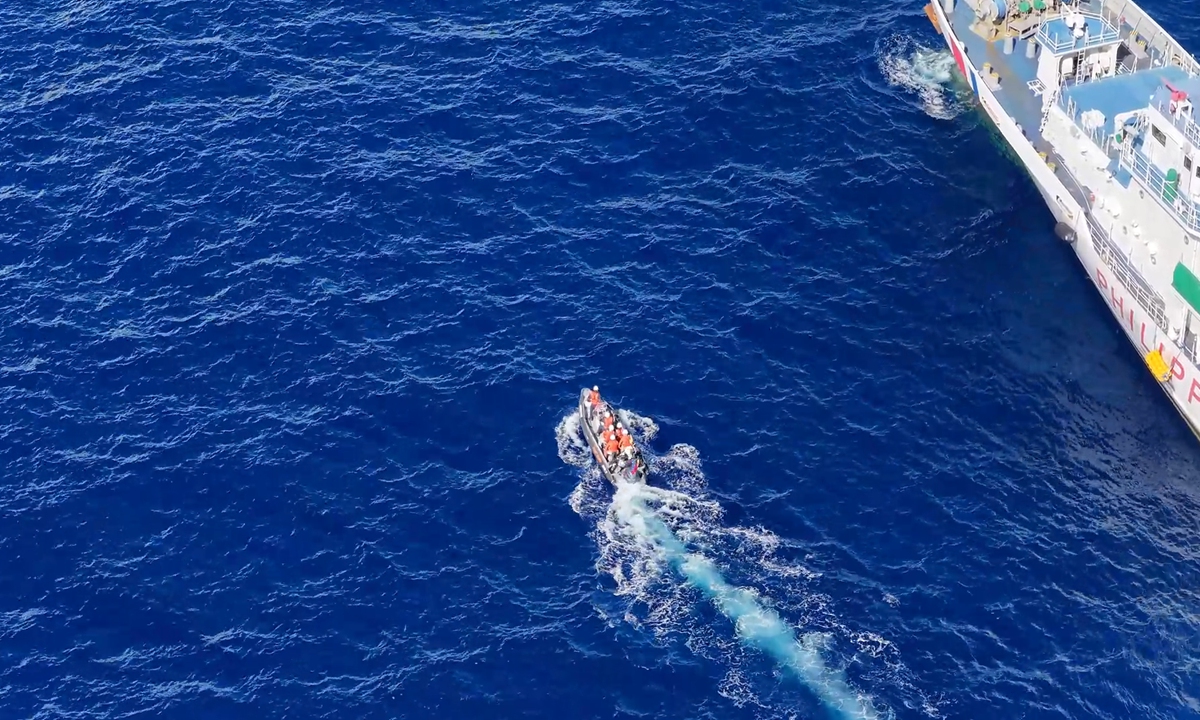
Chinese experts warned on Wednesday that Manila should not mistake humanitarian accommodation for a concession and must bear the consequences if it scraps the arrangement.
Yang Xiao, a research fellow at the Institute of Peaceful Development under the Chinese Academy of Social Sciences, told the Global Times on Wednesday that the Philippine side's claims are fundamentally flawed from legal, historical and practical perspectives.
Ren'ai Jiao is an inherent part of China's Nansha Qundao, over which China has indisputable and complete sovereignty, Yang said, adding that it is legally untenable for the Philippines to claim that Ren'ai Jiao is part of its exclusive economic zone.
"The Philippines deliberately grounded the abandoned warship at Ren'ai Jiao in 1999 and repeatedly pledged to remove it and restore the reef, but has failed to honor those commitments for more than two decades. This itself constitutes a continuing violation of China's territorial sovereignty," Yang said.
This is not the first time the Philippines has denied seeking China's approval for resupply missions to Ren'ai Jiao. In April 2025, Chinese Foreign Ministry spokesperson Guo Jiakun responded to similar claims, saying that China's position on how to handle the current situation at Ren'ai Jiao is clear and consistent.
"First, by keeping its warship grounded at Ren'ai Jiao for decades running, the Philippines has been violating China's sovereignty and the Declaration on the Conduct of Parties in the South China Sea (DOC). We demand that the Philippines tow away the warship. Second, between now and when the warship is towed away, should the Philippines need to send living necessities, China is willing to allow it in a humanitarian spirit if the Philippines informs China in advance and after on-site verification is conducted. Third, if the Philippines were to send large amount of construction materials to the warship and attempt to build fixed facilities or permanent outpost, China will absolutely not accept it and will resolutely stop it in accordance with the law and regulations," said the spokesperson.
"This means that the Philippines' so-called '15 safe and incident-free resupply missions' were all made possible by China's humanitarian accommodation and strict oversight," Yang stressed. Each mission was reported in advance and allowed to proceed only after inspections confirmed no prohibited construction materials were aboard. The CCG intercepted any such materials through lawful measures, Yang said.
The Philippines' unilateral denial of its notification and inspection obligations while enjoying the arrangement's benefits amounts to a blatant breach of its commitments, the expert noted.
Yang also noted that Manila's narrative contains an obvious logical contradiction. If Philippine resupply missions were truly unimpeded, there would be no need for Manila to repeatedly claim that China had "blocked" its missions and call for international intervention. Yet if China had continuously "obstructed" the missions, the Philippines could not have completed 15 safe and incident-free resupply operations.
"Manila has simply manipulated its narrative to suit its publicity needs, portraying itself as a 'victim' when seeking international attention while touting smooth resupply operations and its own strength when seeking to project toughness. Its hype over the 15 resupply missions is essentially aimed at rallying domestic support and stoking confrontation internationally to conceal the reality that its illegal presence is tightly constrained," Yang said.
China's handling of the Ren'ai Jiao situation, meanwhile, has consistently reflected restraint and humanitarian considerations. According to a statement by the China Coast Guard (CCG) spokesperson on the transfer of injured personnel by the Philippine side, Jiang Lue, a CCG spokesperson, said that on the morning of July 21, out of humanitarian considerations, China allowed the Philippines to transfer injured personnel by small boats from the BRP Sierra Madre (LT-57), which has been illegally grounded at Ren'ai Jiao, to Philippine Coast Guard vessel 9702. The CCG questioned and verified the Philippine vessels and monitored the entire process.
The CCG will continue to carry out rights-protection and law enforcement operations in accordance with the law in the waters around Ren'ai Jiao to safeguard China's territorial sovereignty and maritime rights and interests, Jiang said.
Yang said, stressing that Manila's tough talk and one-sided claims cannot make up for its legal and moral shortcomings.
"Any attempt to permanently occupy Chinese islands and reefs, unilaterally tear up the understanding and continuously challenge China's territorial sovereignty runs counter to international law and the broader trend toward peace and development in the region and is ultimately doomed to fail," Yang added.
。

B | 讯 8月14日,河南省政府新闻办召开河南省开展生态环境法典涉及地方性法规清理工作新闻发布会。 会上,河南省生态环境厅党组成员、副厅长赵杰介绍,《中华人民共和国生态环境法典》于8月15日起正式施行,这是我国生态文明建设领域具有里程碑意义的大事。按照省人大常委会统一部署,省生态环境厅高度重视、主动靠前,全程配合推进本次地方性法规专项清理工作。主要开展了以下工作。 一是高位推动、全面清理。省生态环境厅第一时间成立由厅主要领导任组长的清理工作专班,明确工作责任、细化清理步骤,严格对照生态环境法典和省人大要求的清理重点,全面排查地方性法规与生态环境法典不适应、不一致、不协调的条款,做到全覆盖、无遗漏。同时,聚焦黄河流域生态保护和高质量发展重大战略任务落实、南水北调水源地水质安全保障重大政治责任落地,结合河南省污染防治攻坚实际工作,确保清理工作既贴合国家法典统一规范,又契合河南生态环境保护实际需求。针对排查发现的问题,逐项研究、逐条比对,经过厅内多次专题会商、广泛征求相关方面意见、反复论证修改,依法提出修正、修改、废止等清理建议。 二是分类处置、关注民生。在省人大的指导帮助下,省生态环境厅对10部法规提出清理建议137条,其中对《河南省建设项目环境保护条例》《河南省辐射污染防治条例》《河南省人民代表大会常务委员会关于进一步加强水污染防治工作的决议》3部主要内容失效、不再适应发展需求的法规提出废止建议,对《河南省水污染防治条例》《河南省大气污染防治条例》《河南省土壤污染防治条例》《河南省固体废物污染环境防治条例》《河南省南水北调饮用水水源保护条例》《河南省实施〈中华人民共和国黄河保护法〉办法》等6部存在条款滞后、冲突瑕疵的法规提出修订建议。上述清理建议均被省人大常委会采纳,经省十四届人大常委会第二十五次会议审议通过。同时,积极落实生态环境法典规定,联合省自然资源厅、省住房和城乡建设厅制定《河南省建设用地土壤污染风险管控和修复名录管理办法》,与法典同步实施。

C | 清理过程中,省生态环境厅特别注重回应群众关切的突出环境问题,将法典的原则性规定转化为具体制度。例如:在大气污染防治方面,修改后的《河南省大气污染防治条例》明确要求各级政府加强餐饮服务业布局统筹,从源头防范化解餐饮油烟扰民问题,直接回应民生痛点。在水污染防治方面,修改后的《河南省水污染防治条例》明确地方各级人民政府对本行政区域黑臭水体负有调查和治理责任,为消除黑臭水体提供了明确的法律依据。

D | 在固废污染防治方面,修改后的《河南省固体废物污染环境防治条例》对退役风电机组叶片、退役光伏组件、废旧动力电池等新兴固体废物的拆解处置提出了明确的污染防治要求,填补了这一制度空白。 下一步,省生态环境厅将主要做好三个方面的工作:一是深化法治宣传引导。分层分类开展法典及河南省生态环境地方性法规学习培训和普法宣传,引导企业自觉守法、主动治污,不断提升全社会的生态环境法治意识。二是完善配套制度建设。细化法典及地方新规落地的具体举措,逐项梳理执法事项清单,完善执法程序,规范裁量基准,加快构建“法典统领、地方性法规支撑、配套制度完备”的生态环境法治体系。

E | 三是健全长效机制。

F | 建立生态环境领域法规规章规范性文件“定期排查、动态清理”长效机制,确保各项制度与生态环境法典一体贯通,维护生态环境法治统一。版权申明:凡注有“”或电头为“”的稿件,均为独家版权所有,未经许可不得转载或镜像;授权转载必须注明来源为“”,并保留“”的电头。 。


